Research question
Which substantive and methodological preferences can be observed in AI-generated answers to Qur’an-related questions, with regard to style, use of sources, and exegetical perspective?
Why this matters: LLMs are increasingly used for religious Q&A. For the Qur’an,
this raises questions of authority, interpretation, and bias.
Methodology
Study design
- Five major Qur’anic themes (God, Human, Action, Knowledge, Hereafter)
- Four questions per theme
- Three languages: English, German, Turkish
- Two prompt styles: non-technical vs technical (Arabic terms)
Data collection
- ~500 prompts via automated browser interaction
- Separate private chat per prompt
- Simulated natural typing to match end-user experience
Annotation & evaluation
Expert evaluation via a custom Shiny web app with standardized parameters and fixed category options to ensure reproducible annotation.
- Style: analytical · narrative · abstract · exegetical · practical
- Inclusivity: exclusive Muslim · universal human · interfaith inclusive
- Certainty: definitive · tentative · open-ended
- Sources: Qur’an · Hadith · secondary literature · none
- Exegetical perspective: traditional/hadith-based · rational · philosophical · socio-political · mystical · feminist · linguistic/philological · normative/jurisprudential · scientific
- Hermeneutic strategy: direct citation · paraphrase · analogy · rational argument
- Contextualization: text-only · historical/social context
- Theme alignment: on theme · blends themes · diverges
Key findings (preliminary)
High-level tendencies
- Answers are predominantly analytical in style.
- Qur’an references are frequent; Hadith references are rare; secondary sources appear in a minority.
- Definitive tone dominates; tentative answers are relatively rare.
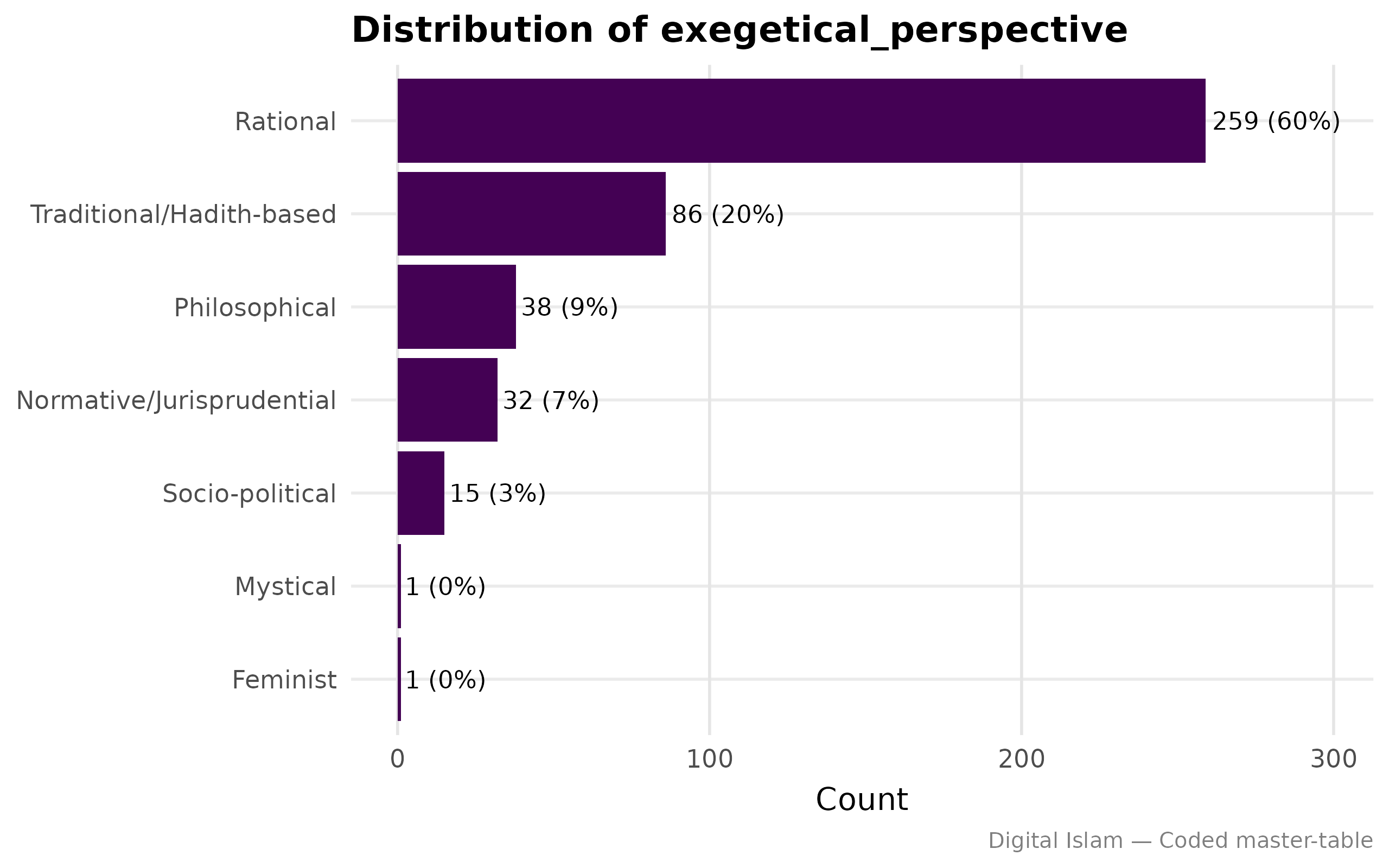
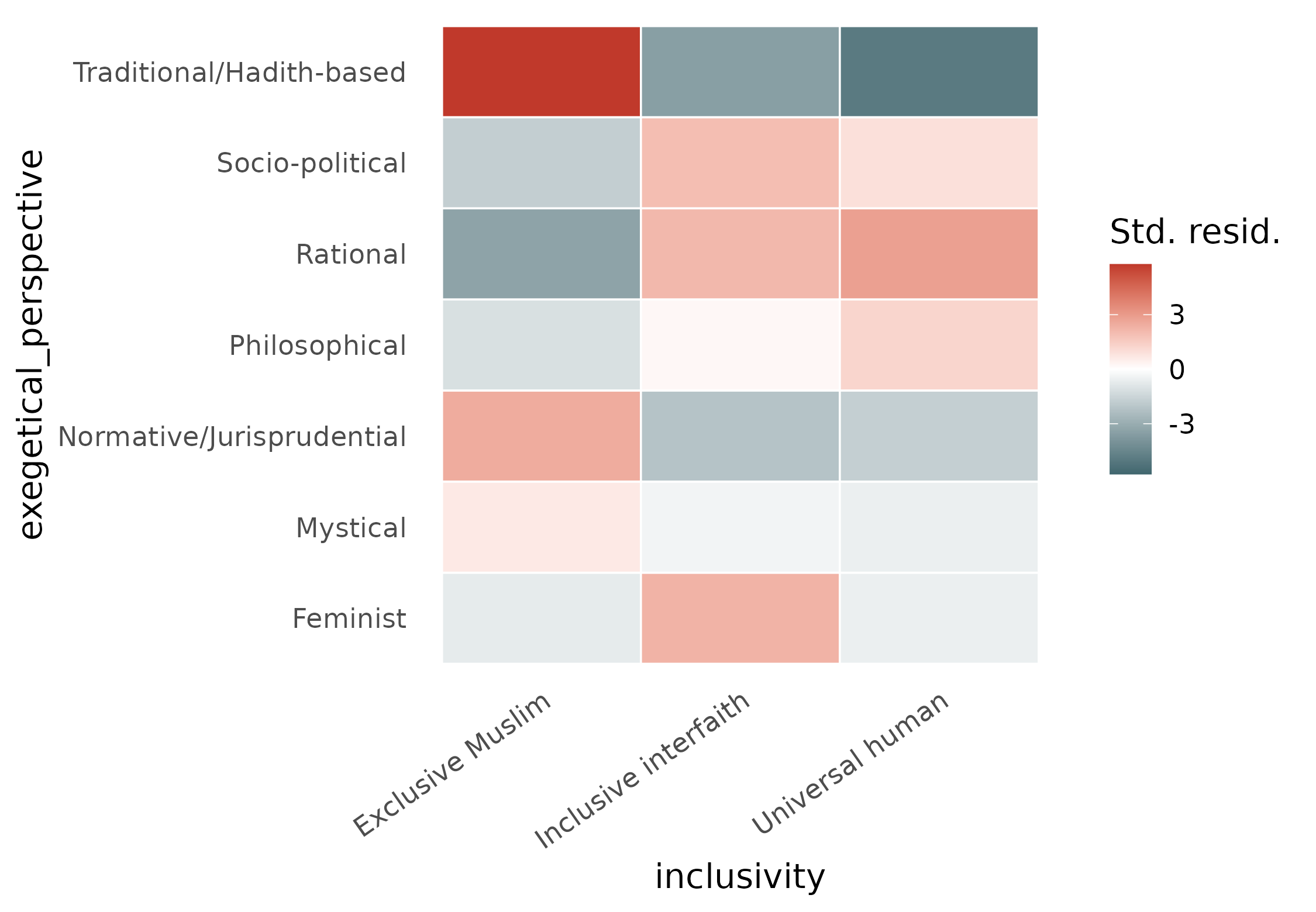
- Rational and traditional/hadith-based perspectives appear most frequently; others are marginal.
Note: This site summarizes the talk. The full paper and full statistical reporting are in preparation.
Normative guidelines (summary)
- Recognize textual anchoring: check whether certainty is text-based or inflated by model tendencies.
- Handle rational/contextual answers with care: plurality isn’t automatically “weak.”
- Be theme-sensitive: expectations differ by doctrinal vs ethical/modern topics.
- Compensate under-representation: supplement with Hadith and scholarly works to avoid reductionism.
Authors & contact

Dr. Ibrahim Aslandur
Researcher in Religious Education & Qur’anic Studies
Dr. Arif Dönmez
Interdisciplinary AI Researcher